Flooding In Ghana
Protecting Your Property Before and After the Storm
Cameron Kyser
6/9/20262 min read
BUILDING INSPECTORS OF GHANA (BIG)
Flooding in Ghana: Protecting Your Property Before and After the Storm
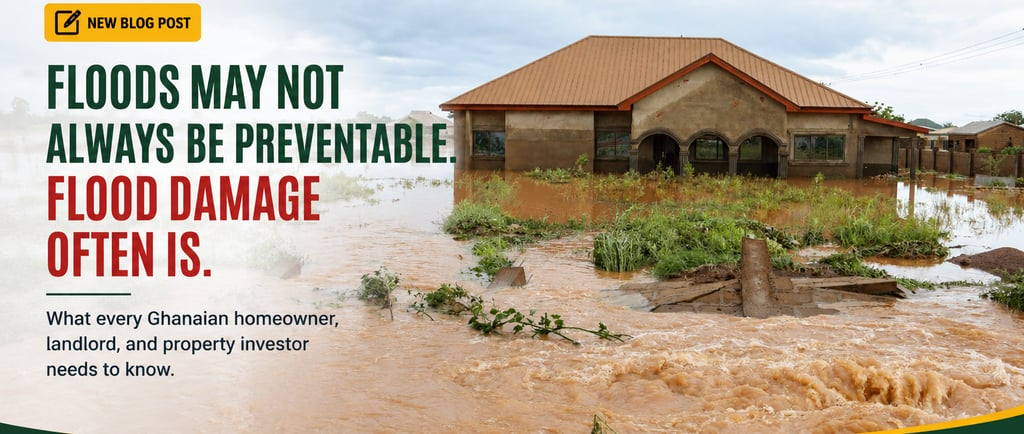
Recent flooding across parts of Ghana has once again highlighted the vulnerability of many homes, businesses, and communities. Our thoughts are with the families who have experienced property damage, displacement, and loss.
At Building Inspectors of Ghana (BIG), we believe it is important to recognize that not all flooding is preventable by the homeowner. Extreme rainfall events, climate change, dam releases, blocked public drainage systems, and inadequate municipal infrastructure can overwhelm even well-maintained properties. Flooding remains a national challenge that requires collaboration between government agencies, local authorities, developers, and property owners.
However, while some causes of flooding are beyond our control, the severity of damage is often influenced by how a property is designed, constructed, and maintained.
During inspections across Ghana, BIG commonly observes:
• Homes constructed at or below surrounding grade levels.
• Improper site grading that directs water toward the building instead of away from it.
• Lack of roof gutters and downspouts to control rainwater discharge.
• Absence of French drains or other drainage systems.
• Inadequate stormwater management around compounds.
• Entire compounds covered with tiles, concrete, or paving, leaving little exposed soil for water absorption.
• Blocked drains and poorly maintained drainage channels.
When rain falls faster than the ground can absorb it, water must have somewhere to go. Properties that lack proper drainage and grading are significantly more vulnerable to flooding, foundation movement, dampness, mold growth, and long-term structural deterioration.
Property owners should consider the following actions:
✓ Inspect site grading and ensure water flows away from the building.
✓ Clean gutters, downspouts, and drainage channels before and during the rainy season.
✓ Install proper roof drainage systems where absent.
✓ Consider French drains, catch basins, or other drainage improvements in flood-prone areas.
✓ Maintain open soil and landscaped areas to promote natural water absorption.
✓ Regularly inspect retaining walls, compound walls, and drainage paths for signs of failure.
✓ Document property conditions with photographs before and after major rainfall events.
For prospective buyers, flooding risk should be evaluated before purchasing a property. A professional building inspection can identify grading issues, drainage deficiencies, moisture intrusion, structural concerns, and other conditions that may increase flood vulnerability.
Floods may not always be preventable, but the extent of property damage can often be reduced through proper planning, construction, maintenance, and informed decision-making.
As Ghana continues to experience more frequent extreme weather events, resilience must become part of how we build, buy, and maintain our properties. Ghana's recent flood events, along with official disaster preparedness guidance, continue to emphasize the importance of drainage management, flood planning, and proactive property maintenance.
Building Inspectors of Ghana
Protecting Property. Protecting Families. Protecting Investments.